
Pilina ʻAi: Voice of the Farmer
Just as the pili grass, we grow in our collective stewardship to ʻāina, moʻolelo, and good food across Hawaiʻi. To us, these connections are the lasting relationships we create, reflecting the importance of sustaining practices that improve systems for generational wealth and wellbeing.
Pilina ʻAi: Voice of the Farmer, is the first of a gathering series intended to weave voices that support the growing, sharing, and eating of locally grown food.
Papa ‘Ōlelo (vocabulary): ʻāina, hoa ʻāina, ahupuaʻa, moʻolelo, pilina, ʻāina momona, paeʻāina, kupa ʻāina, makaʻāinana, kuleana, kāhua
Inoa ʻĀina (place names): Heʻeia, Koʻolaupoko, Waianu (Waiāhole), Waiʻanae, Kualoa, Lumahaʻi, Hanalei
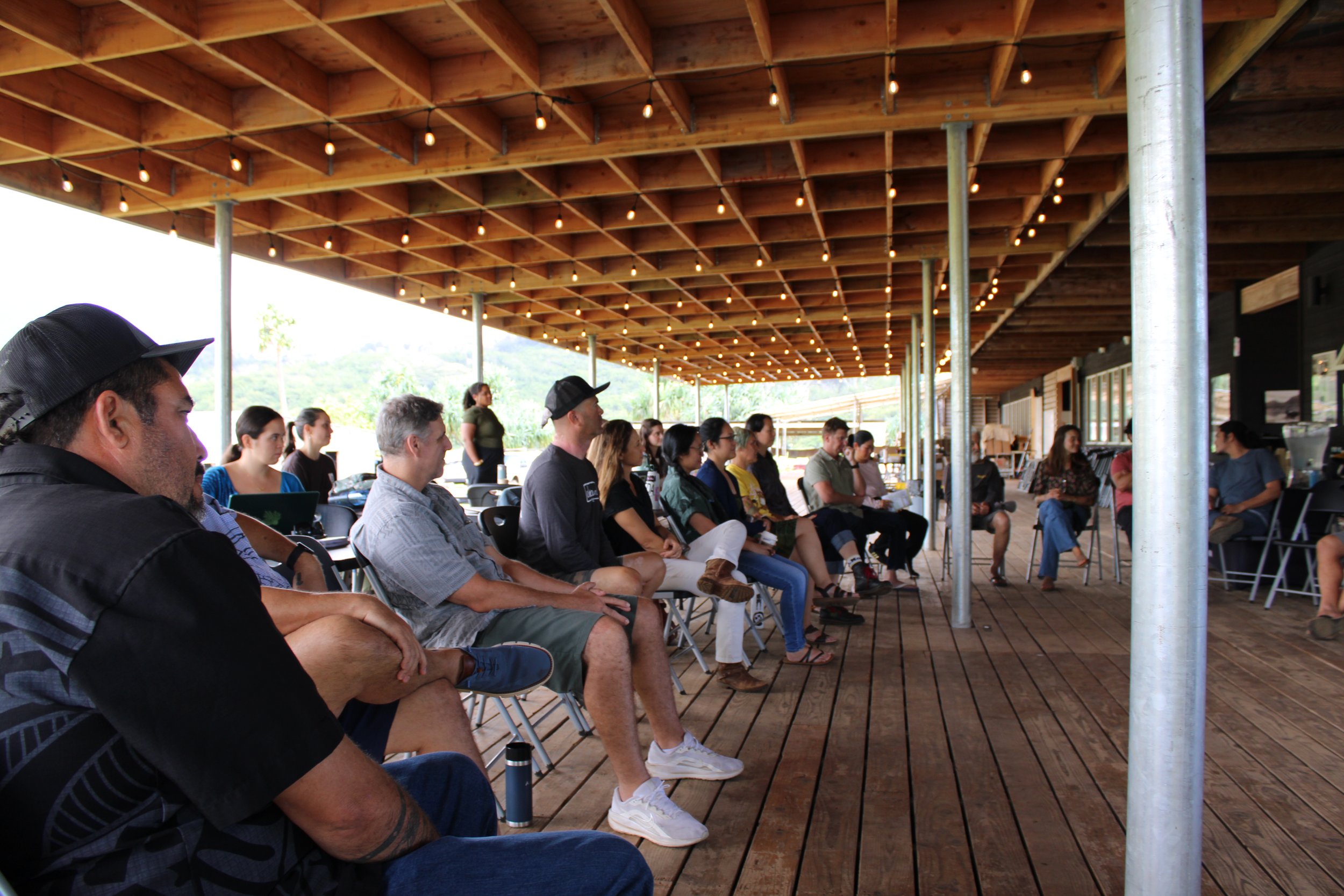
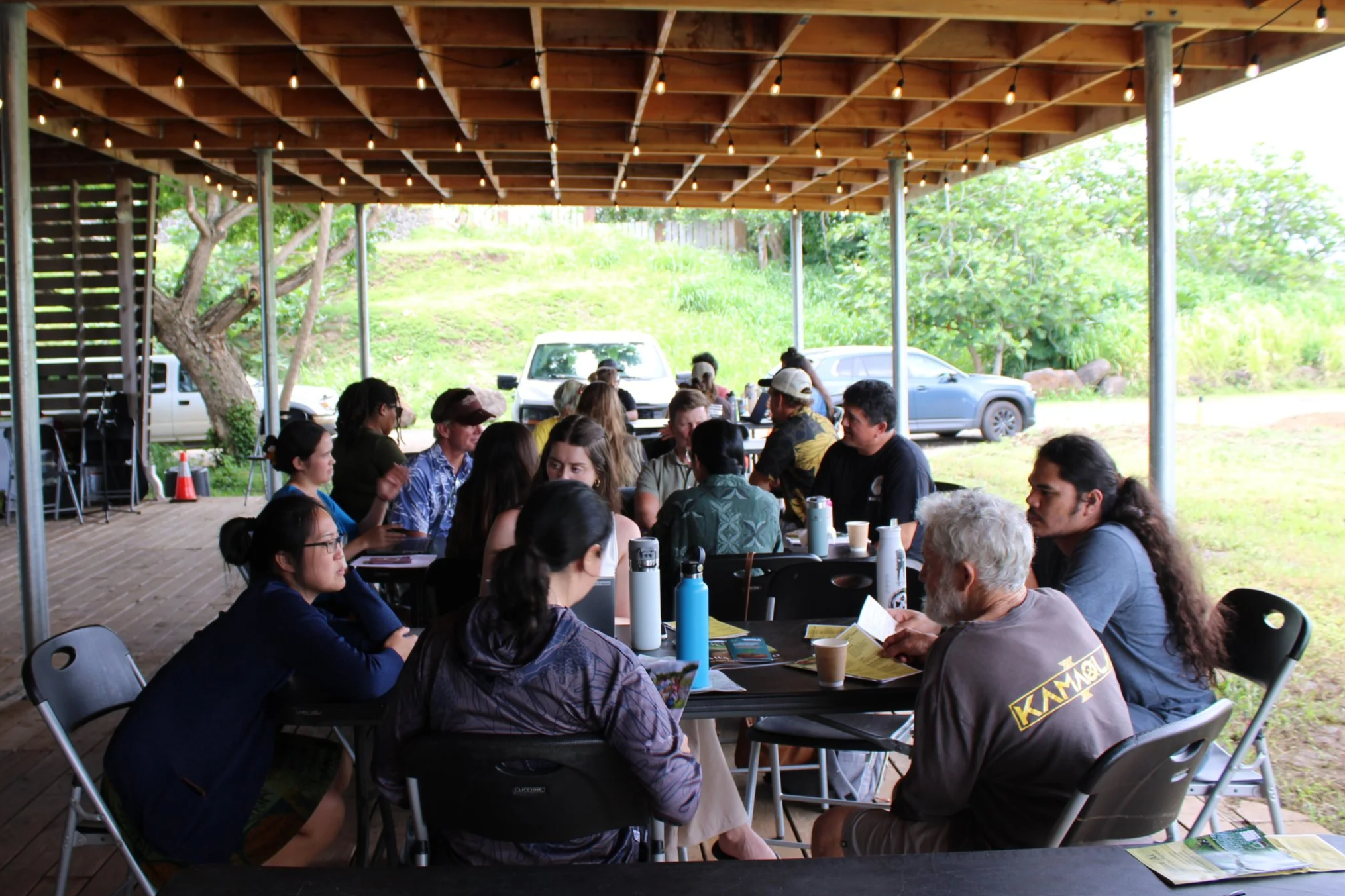
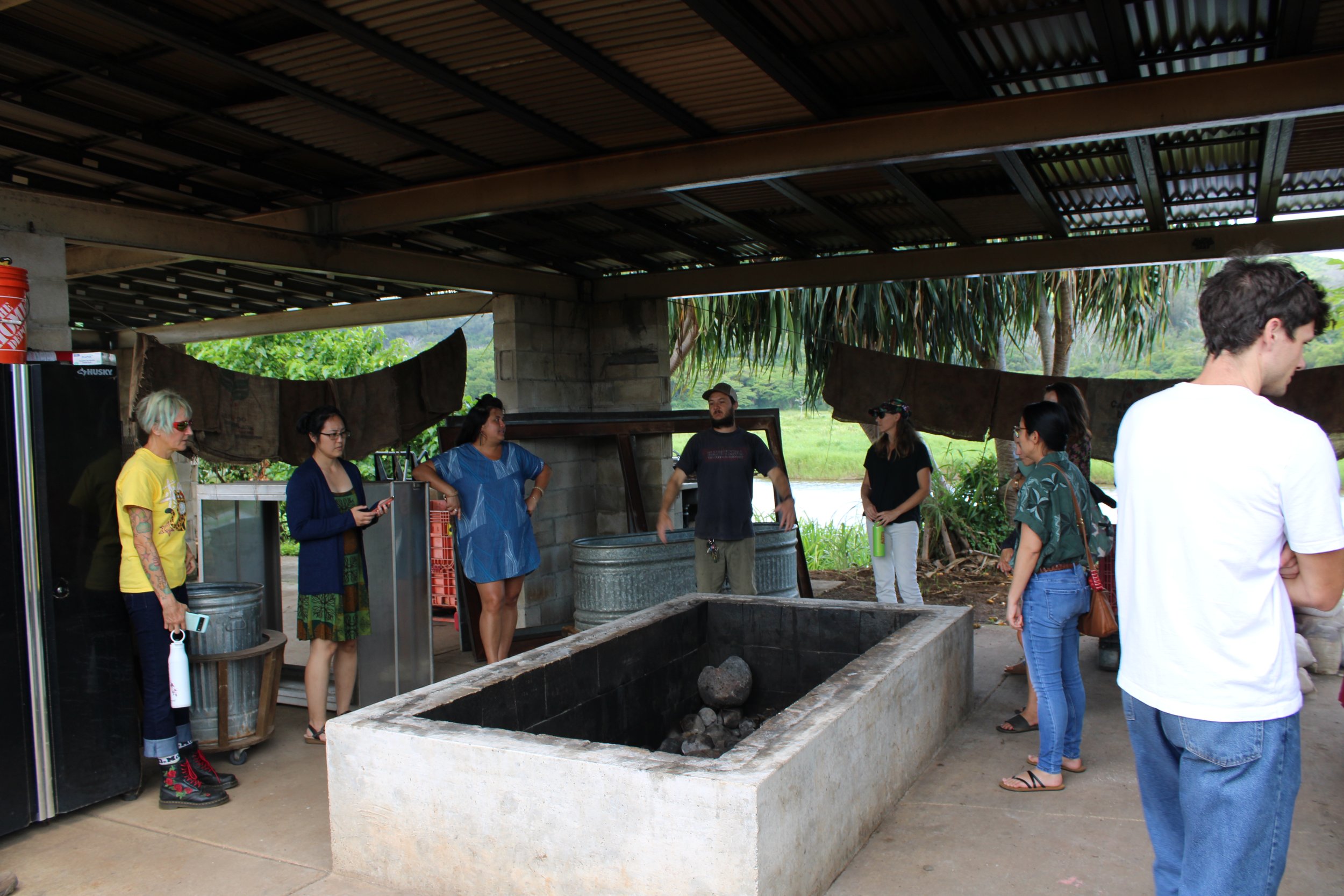
Under the shade of Opunui, Kākoʻo ʻŌiwi’s gathering space and value-add facility, the Hawaiʻi Good Food Alliance brought together a group of farmers, food hubs, and community-based organizations devoted to strengthening local food access across the paeʻāina.
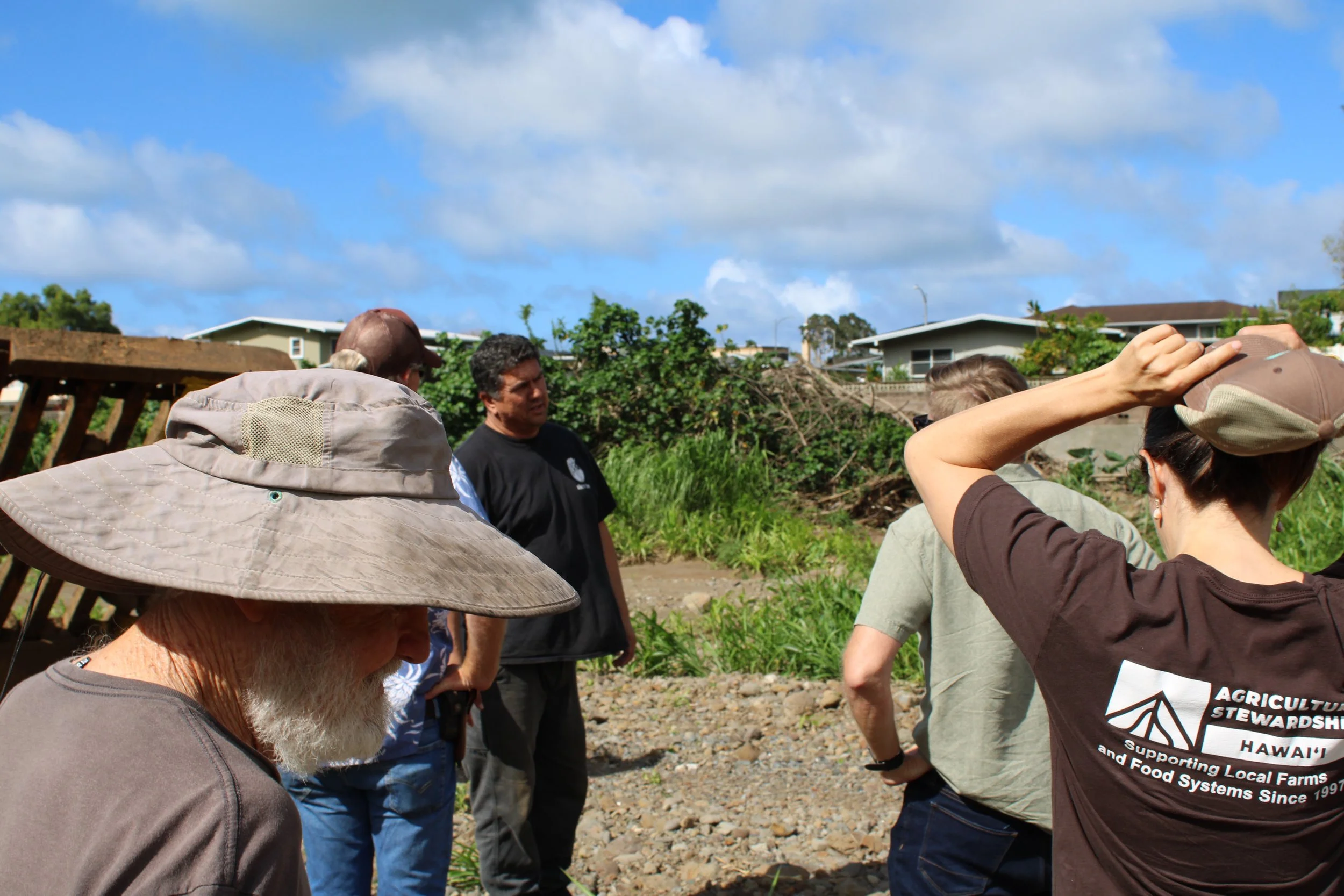
Over the course of the day, we connected to moʻolelo of ʻāina, of makaʻāinana, and the rich history of Koʻolaupoko. The talk-story panel discussions and breakout groups were focused on generational stewardship, land access, statewide collaboration, policy, and the future of farming.
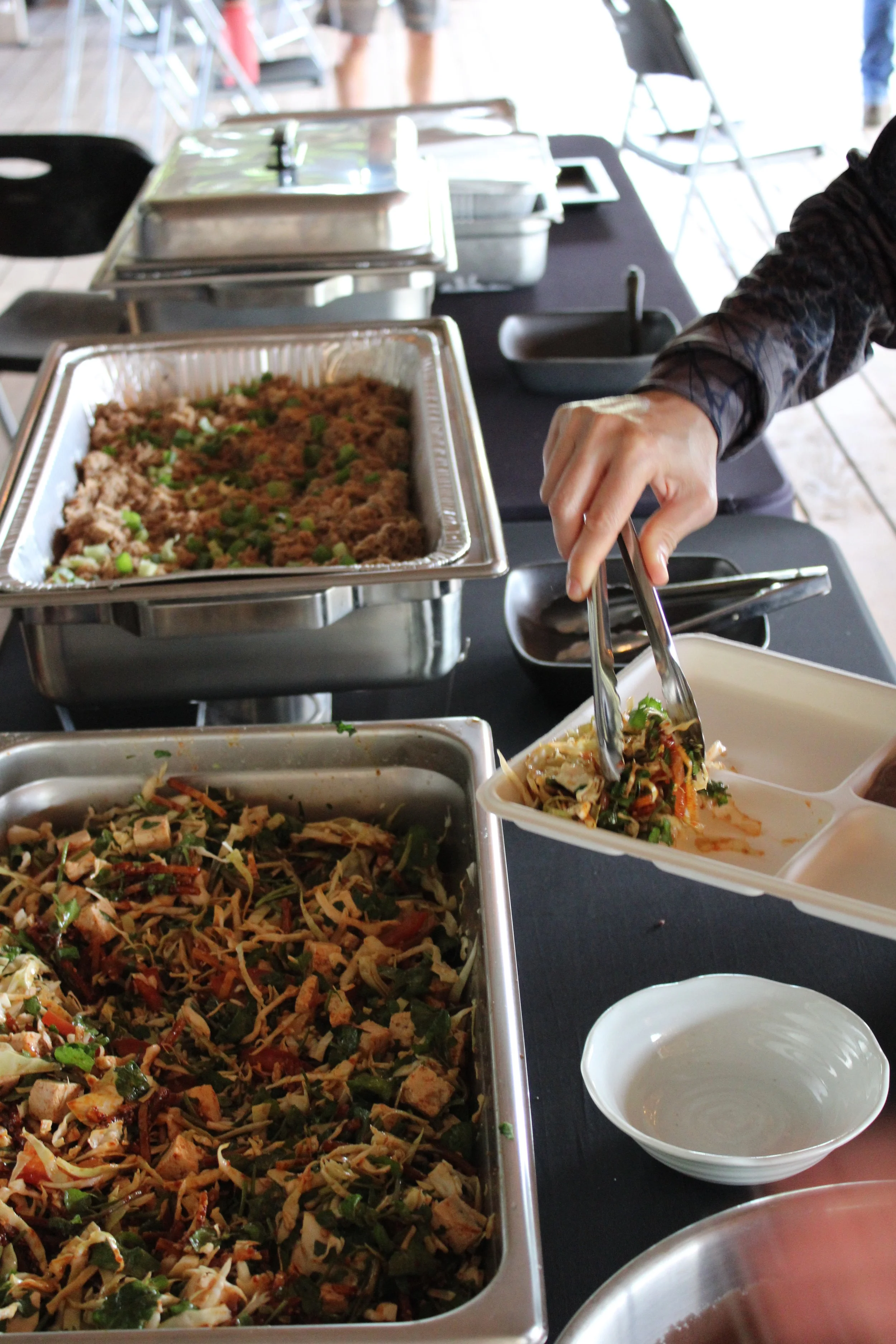
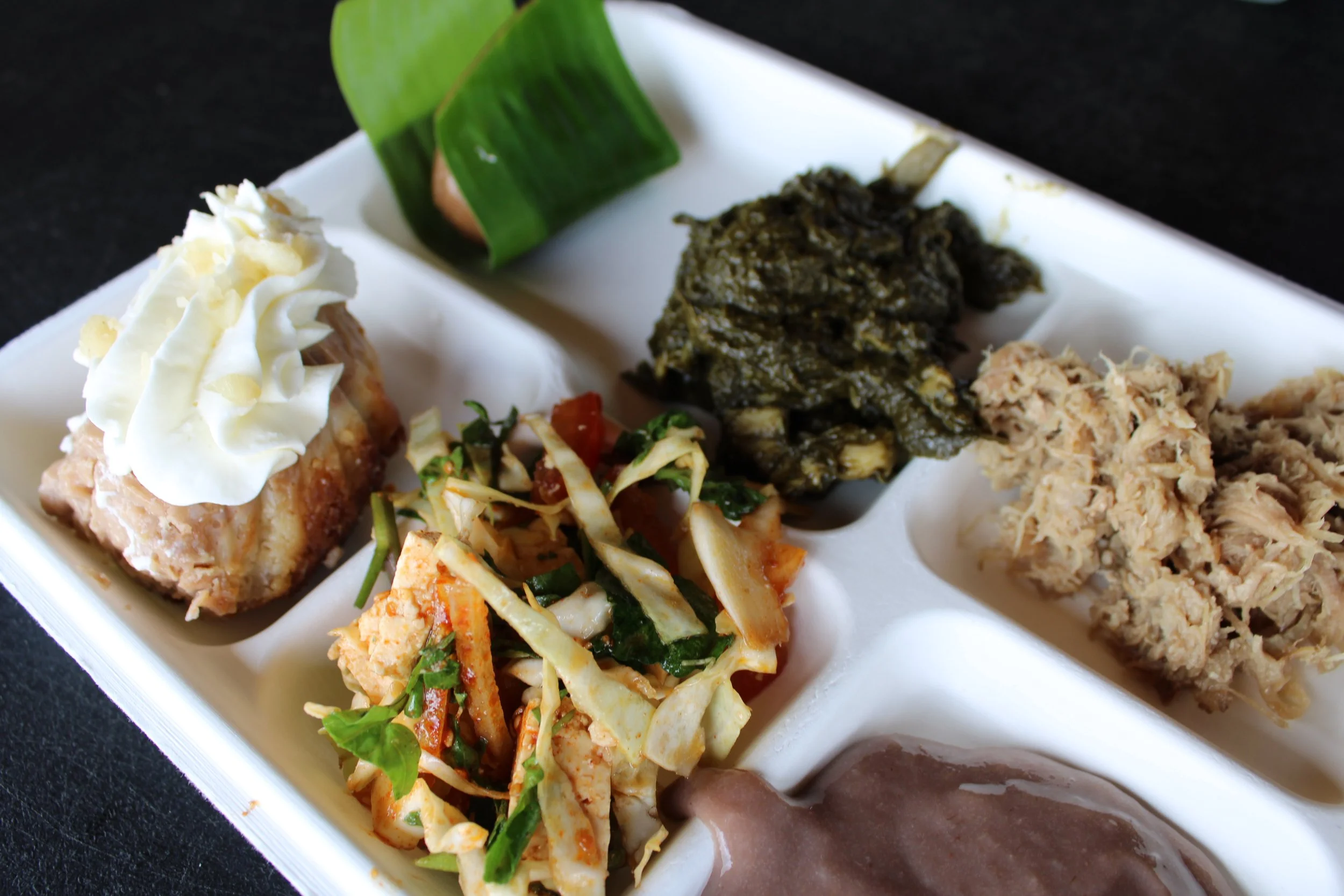
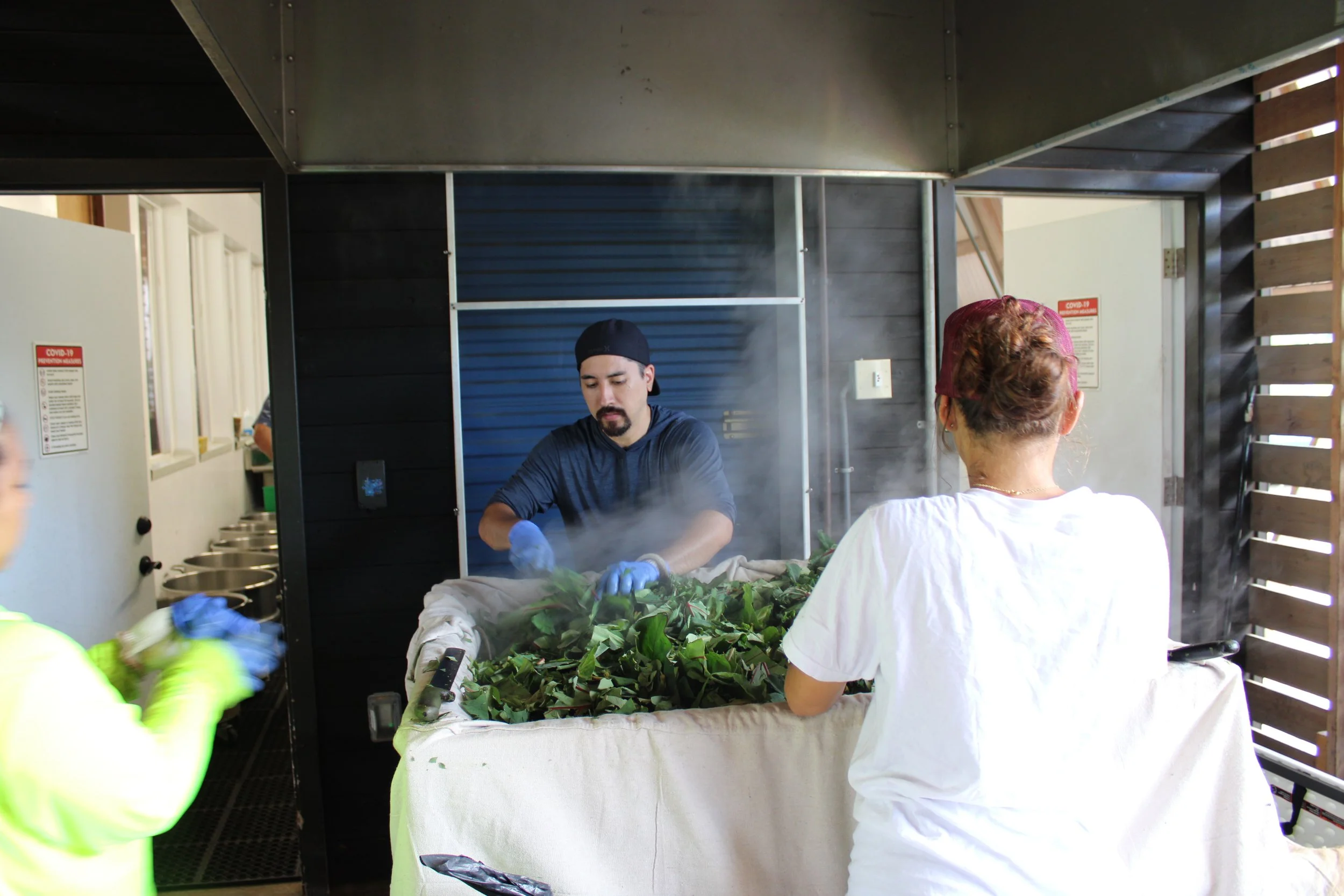
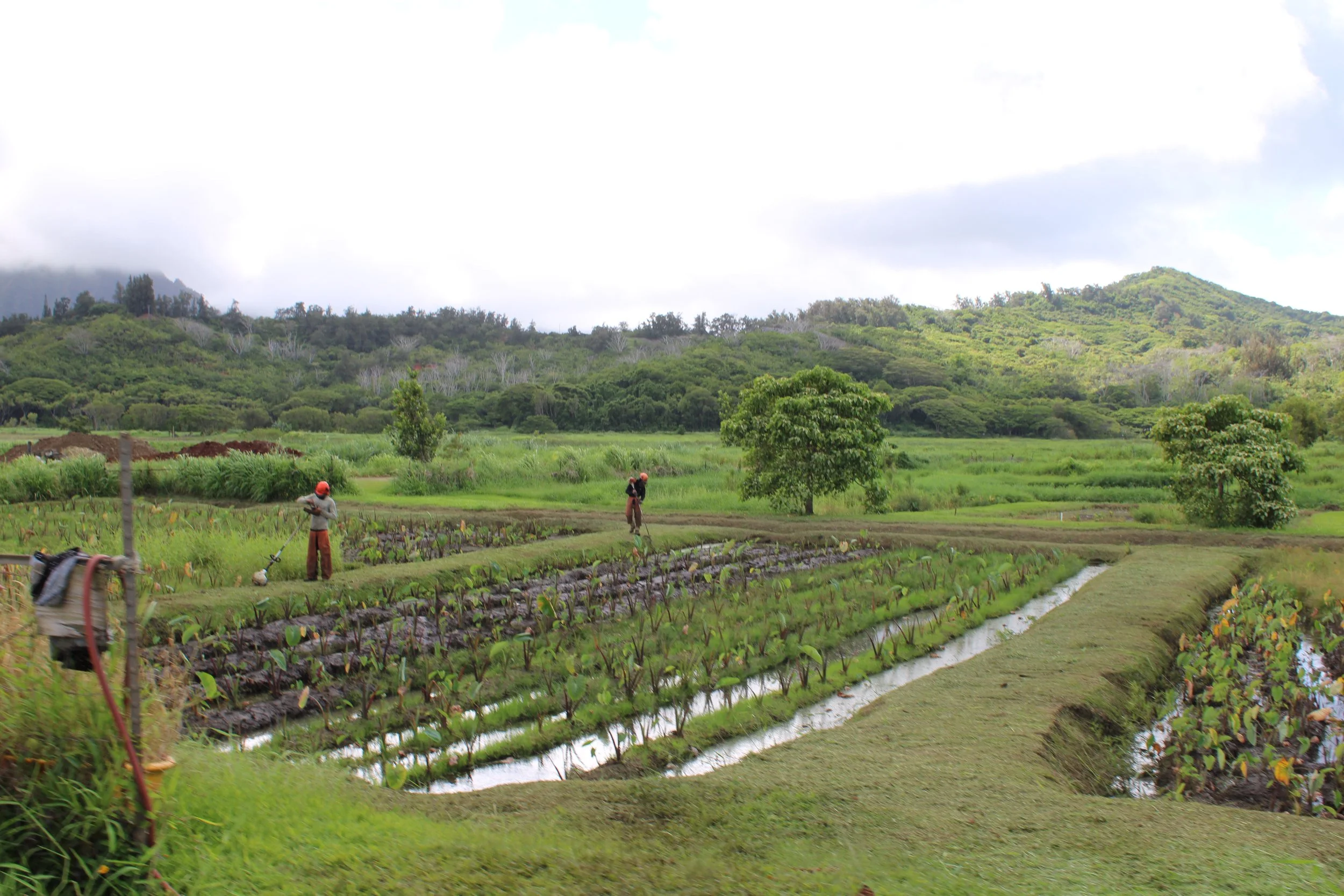
We experienced the abundance of Heʻeia with a delicious farm-sourced lunch (mushroom lūʻau! Kalua pork! Poi! Kūlolo crunch!) prepared by hoa ʻāina of Kākoʻo ʻŌiwi. After lunch, they led a guided tour of their commercial processing facilities and loʻi while sharing their community-led vision of restoring the ahupuaʻa of Heʻeia through ʻāina momona.
The common thread of the first panel was focused on building trust through support and connection to contributing raw kalo to Kakoʻo ʻŌiwi, purchasing its cultural food products, or utilizing its processing facilities—growing their collective efforts in the revitalization of kalo production and cultural food consumption.
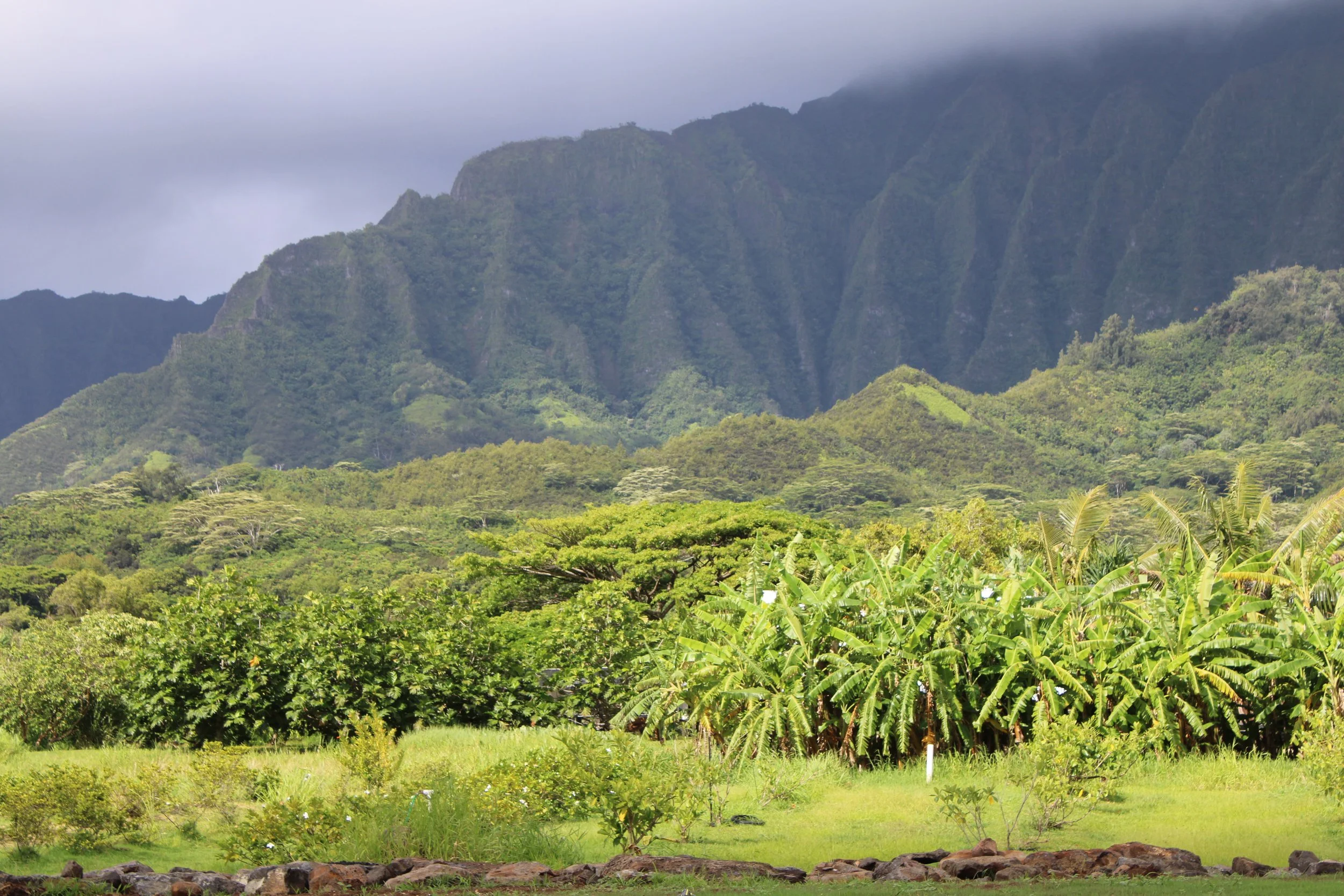
Kakoʻo ʻŌiwi supplies over 4,000 pounds of poi, kalo paʻa, kūlolo, and lūʻau gathered from farmers on Oʻahu and Kauaʻi to many organizations weekly–including Hawaiʻi Food Bank, Hawaiʻi Pacific Health, Elepaio Social Services, and Kamehameha Schools.
Kanekoa Shultz, Executive Director of Kākoʻo ʻŌiwi, shared how the connection to community and caring for ʻāina was a critical part of Heʻeia’s history in the “Keep the Country, Country” movement of the ’70s. Heʻeia paved the way for long-term stewardship of agricultural lands to be kept for community access, cultural restoration, and food production.
“How you build pilina is about getting out there, ma ka hana ka ʻike, feeling the mistakes, but having the confidence to stand out. For us, we wouldn't be here without the kūpuna that fought to keep this land from being developed. We wouldn’t be here without the taro farmers that taught their kids to farm. We wouldn’t be here without the great support that we had from the federal and state government and Kamehameha schools. There’s just a lot of pilina that had to heal this land, that were built to move this system forward, and we’re not done yet.”
–Kanekoa Schultz, Executive Director of Kākoʻo ʻŌiwi
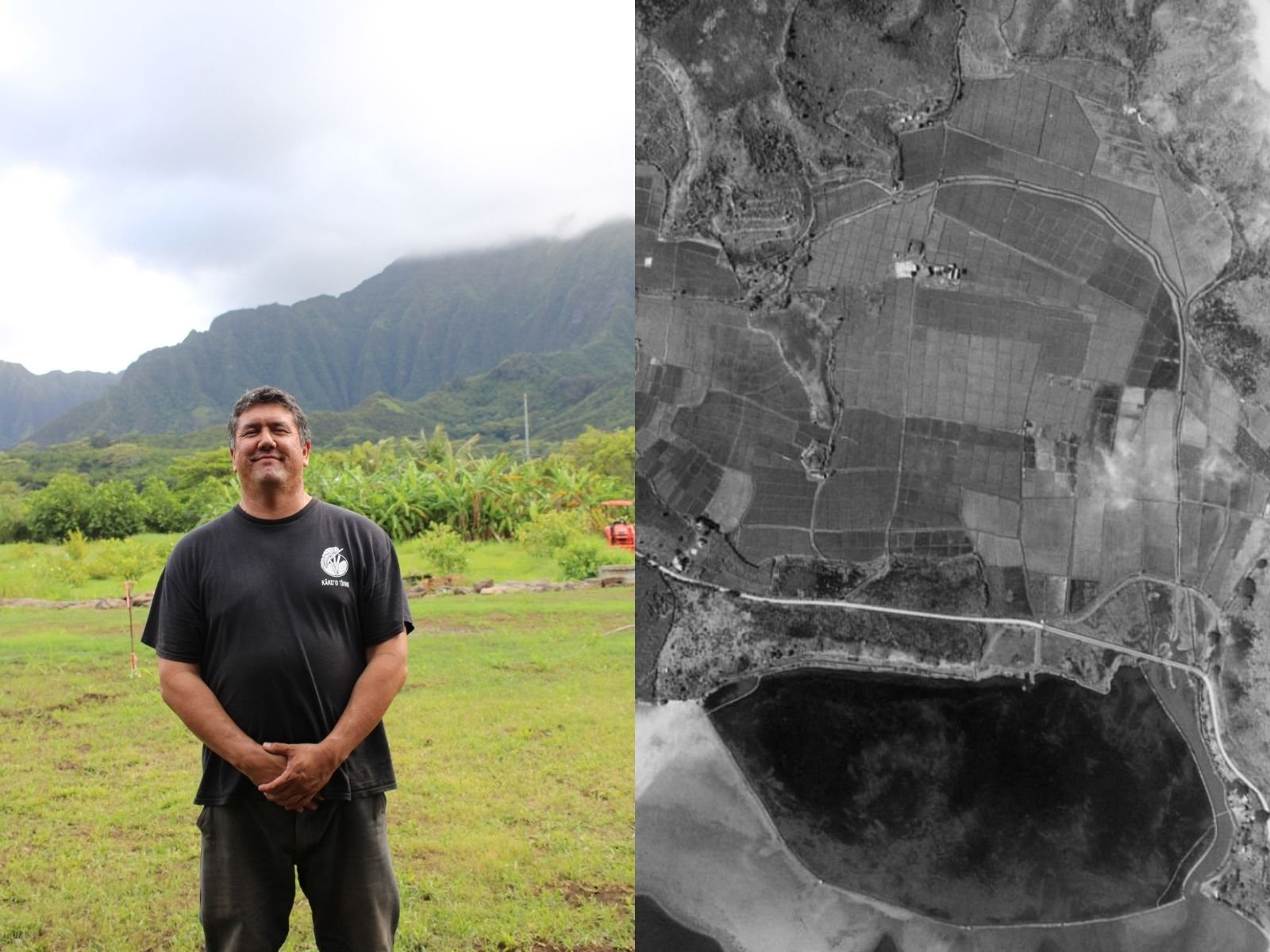
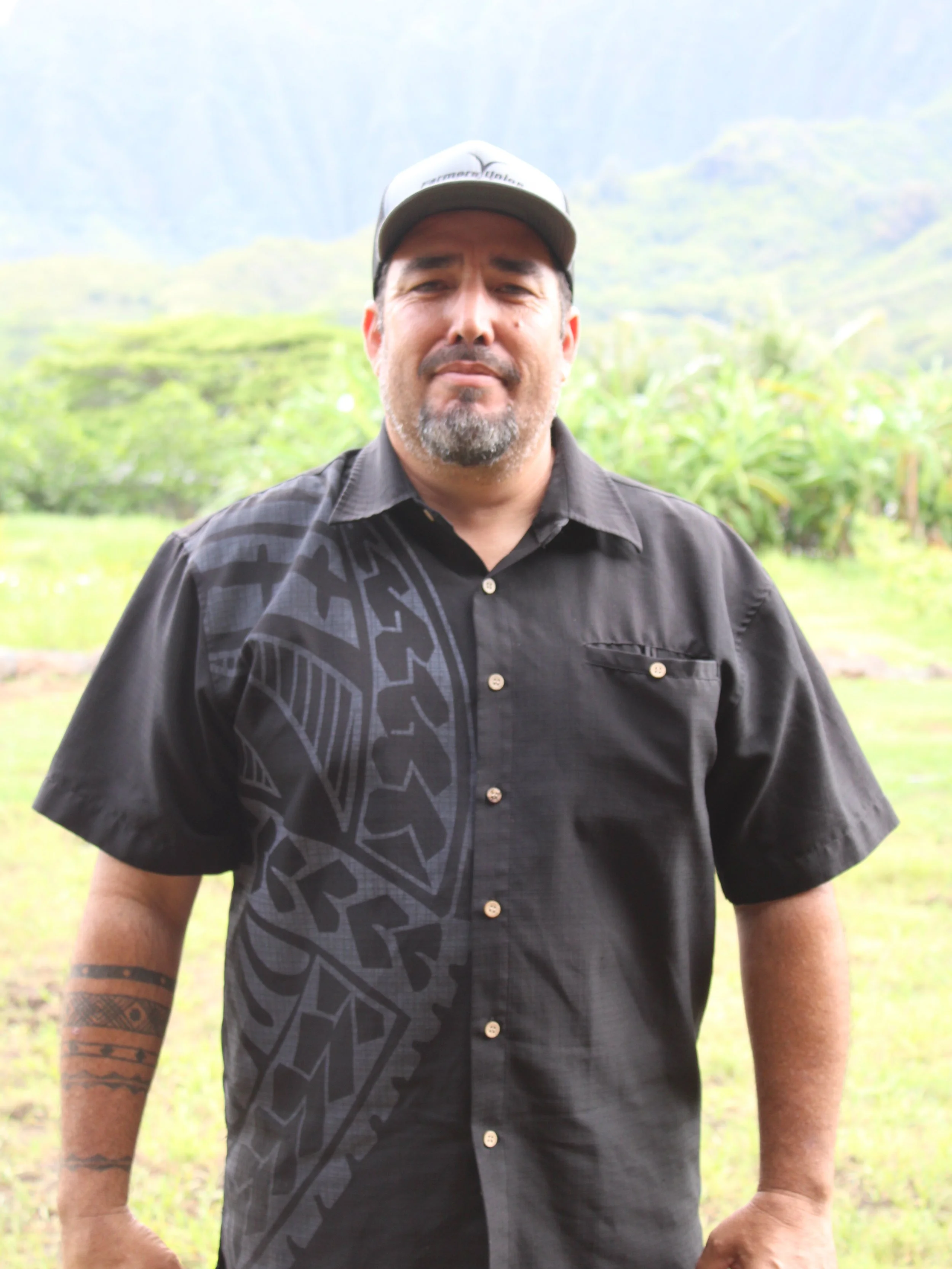
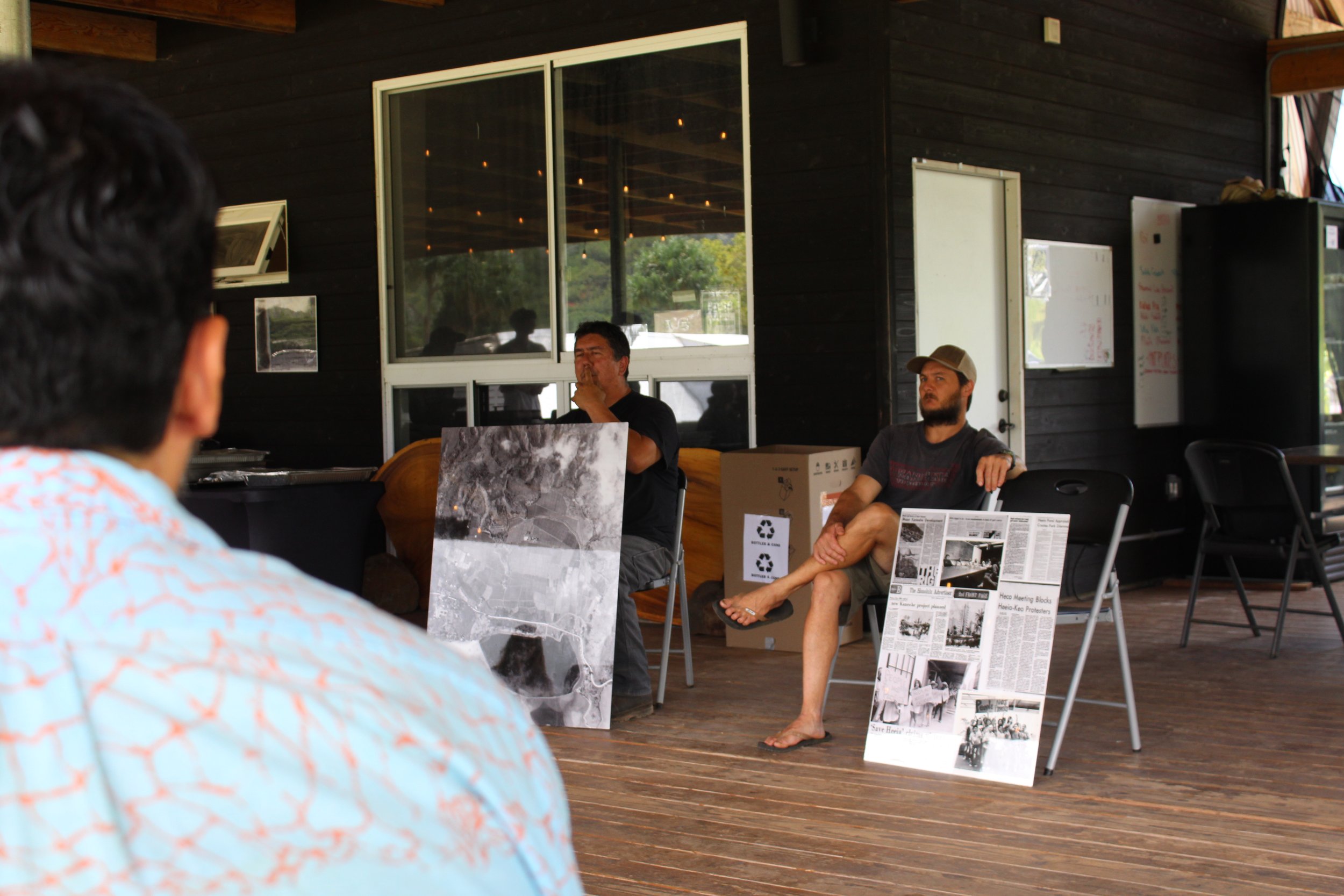
Kanekoa Shultz and an aerial photograph from 1928 showing 200 acres of cultivated wetland (rice and kalo) and He’eia fishpond. The image is an inspiration and roadmap toward restoration of ʻāina momona in He’eia.
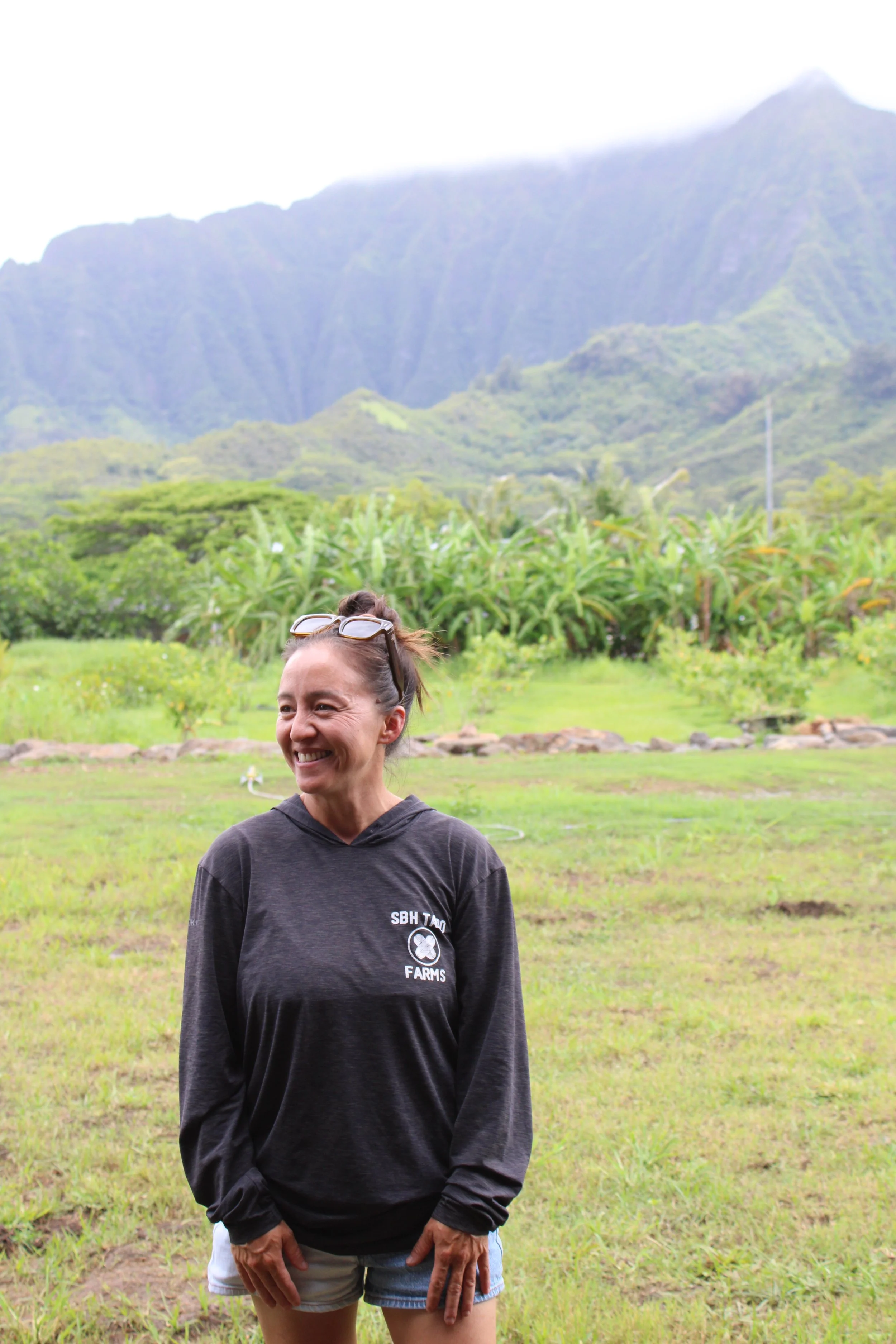
Sierra-Lynn Stone of SBH Taro Farms, a sixth-generation wahine kalo farmer of Hanalei and Lumahaʻi, Kauaʻi, supplies over 400 pounds of raw kalo a week to Kākoʻo ʻŌiwi. She shared the importance of her efforts on Kauaʻi and Oʻahu, and how it influences her legacy as kupa ʻāina and mother of two.
“Being born and raised on Kauaʻi, things are completely evolving and changing around us. So the idea of keeping country, country, keeping our ʻāina for ʻāina purposes, and maximizing it to the best of our ability with the helping hand of ʻohana is crucial.
Now that I have keiki, the goal is to provide that continuity and that true generational stewardship to keep going, and to protect that ʻāina so it doesn’t become a golf course. It’s something that’s happening all around us. And so that fight, that protection is crucial, and it takes that discussion, that opposition and the conversations to be had in order to secure and keep going.”
– Sierra-Lynn Stone, Farm Owner and Operator, SBH Taro Farms
The other panelists, Nicholas Reppun, Taylor Kellerman, and Christian Zuckerman are generational stewards of ʻāina that have contributed to Kākoʻo ʻŌiwi in many ways for almost two decades. All three shared the importance of caring for their community and thinking long term about farming as a way to protect valuable resources.
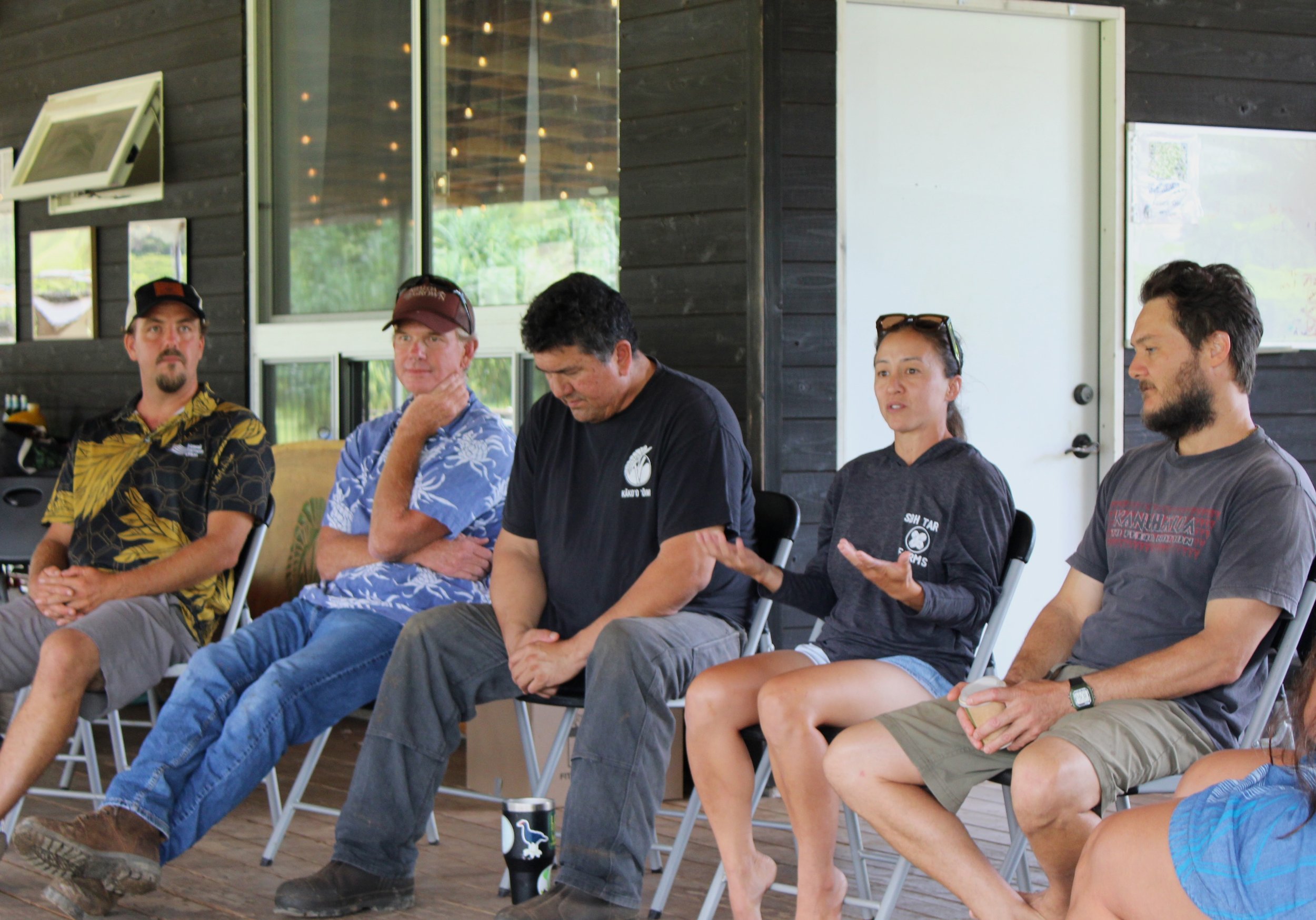
“My approach to generational stewardship and taking care of community is what I try to embody. Yes, we’re trying to hit certain production numbers, but at the same time, it’s critical that we take care of each other as people first and foremost. ‘Cause if we don't, then people don't last.
The biggest cost to farming is stopping to farm. If you walk into a six-generation farm where all the loʻi are set up, you just need to cut the grass and boom, we going. Every time there’s a break in continuity, of stewarding of the resources, you are set back more than one generation to get it going again.”
– Nicholas Reppun, Farmer at Waianu Farm and Director of Farm Development, Kākoʻo ʻŌiwi
“There’s a huge desire in the younger generation to farm. When I started farming over 15 years ago, we were sort of on that cusp. Now it’s like, ‘Oh, you’re farming.’ Everyone wants to know about it and be a part of that conversation. In reality, how do we get people to make that happen? We all know the issues, the barriers, but how do we broaden beyond that so that the other institutions, the other players, the ones that hold the money and the land are really able to come to the table and support us?”
– Christian Zuckerman, Vice President of Hawaiʻi Farmers Union, Director of Procurement at Piko Provisions, and Farm Owner of Ridgeline Farms
“What’s been amazing is building a team at Kualoa, getting to work with people that have it in their heart that farming is what they wanna do. Being able to find those opportunities to be a part of the movement to help grow the next generation—is the biggest thing. At the same time to acknowledge what has been ignored by our history in the last 200 years, particularly, the idea that ‘a crop, is a crop. A community is a community, land is land.’ They do not exist without each other. They all basically are part of the same equation, and all equal parts of the equation.”
– Taylor Kellerman, Director of Diversified Agriculture, Kualoa Ranch
Each farmer shared their deep love of farming and brought to light the struggles of stewarding short term agriculture leases. The most concrete solutions were around solidifying policies for long term and renewable leases and the investment of tax incentives for local food production.
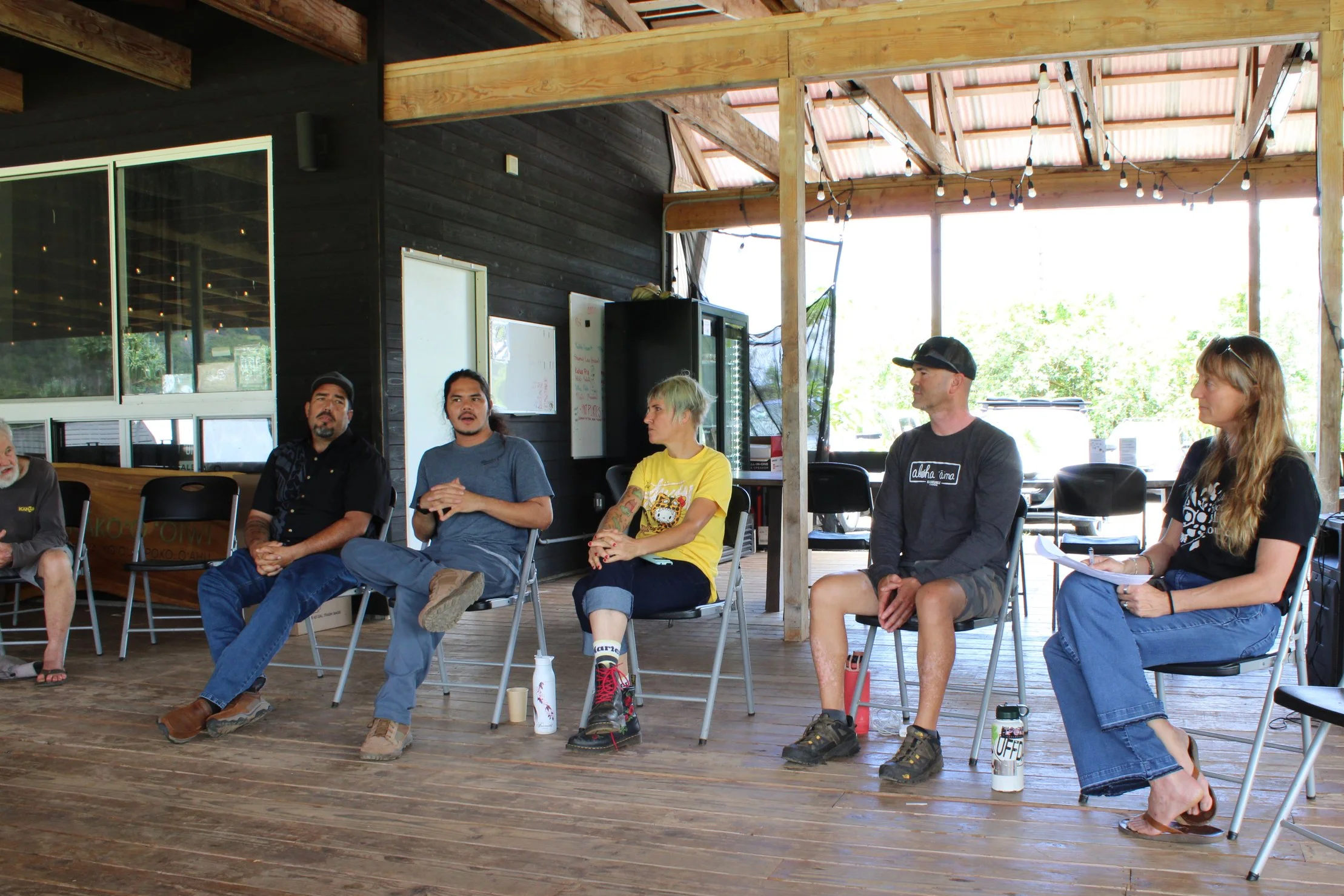
Our second panel expanded to farmers who grow a variety of crops on Hawaiʻi Island, Maui, and Oʻahu. Their manaʻo illuminated the importance of succession, their journey to growing food, and the importance of keeping ʻāina in production so future generations can continue to farm.
Kaipo Kekona, President of Hawaiʻi Farmers Union, shared how the Hawaiian way of farming, the practices of his ancestors, influences his relationship with ʻāina and and with his family.
“Part of why I started to farm was because of my kids, I wanted to give them a life that I never had. So I started comparing what I was like growing up and found what I appreciated, made sure they had that, and found out all the stuff that I didn't appreciate and make sure that they didn’t get that. The only model that showed me a bright future was the one of our ancestors.
Now I find myself in a leadership role of an organization that supports farmers, and really I got involved with that organization because I was frustrated with not having an organization that was supporting native producers. The Hawaiʻi Farmers Union was the most in-line organization that I could find supporting the values of our people.”
– Kaipo Kekona, President, Hawaiʻi Farmers Union
Charlie Reppun, a legendary water protector and kalo farmer, shared how his father built relationships with patients and would prescribe connection to food and farming as a way to improve their health.
“My father was a family doctor. He needed to know something about [his patients’] lives so that he knew that they were gonna do what he was telling them they needed to do to get healthy. I think that knowledge, that way of learning from people—you gotta talk with them, find out what they’re doing, what their life is like. It’s kind of a quick lesson for farming. Where does your food go? Who’s getting it?How can more people grow their own food in their back yards as a way to live healthily?”
– Charlie Reppun, Farmer and Water Activist, Waianu Farm
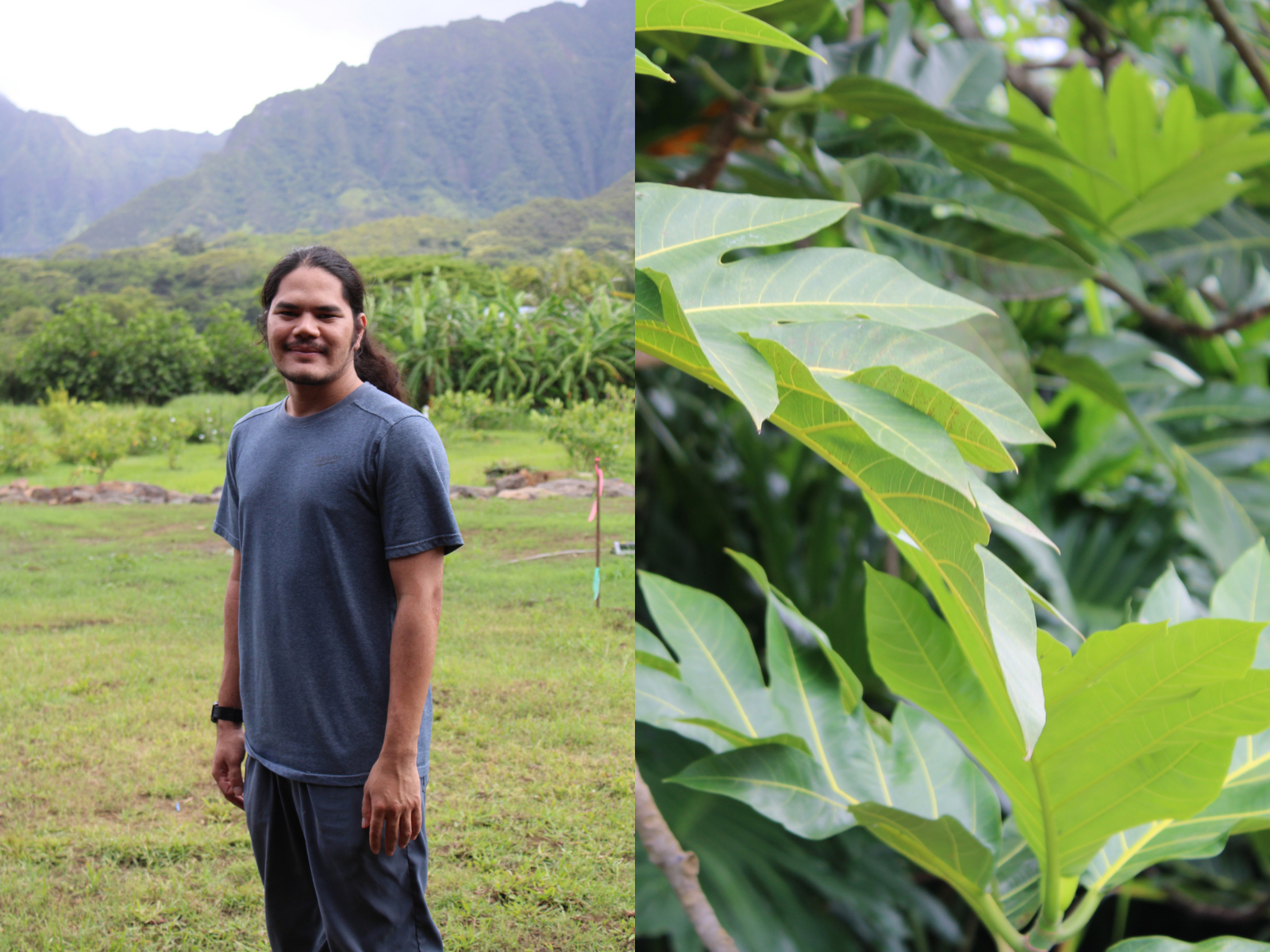
The other three panelists shared their journey to farming and their life long path of learning. No matter what season of life they are in, growing food connects them to their community, lineage, and kuleana to the future.
“I started farming in 2018. I had no farming background, no idea what I was gonna do with my life. The reason I farm is to keep the community access alive so that our future generations can farm on the land, and because I didn’t have access to that.
There’s that pilina to my community that was part of my history, the way I grew up. When I started working in our food hub, I would be able to drive over to a kupuna’s house and help them pick their mangoes, their avocados, their citrus, and just listen to their stories. And they were always so appreciative of what we offered, they were super on board with our gleaning program. They were like, ‘We need this.’”
– Dean Hanohano, Director of Social Ventures, Kahumana Food Hub & Organic Farm
"When I first moved to Hawaiʻi, I participated in The Kohala Center's Beginning Farmer and Rancher Development Program. It gave me a foundation in farming, caring for the land, and managing invasive species. But just as important were the relationships I built with other farmers. They shared their knowledge, encouraged us, and helped shape our journey. Today, we grow blueberries, bananas, cassava, kalo, and many other crops—primarily for our family, our neighbors, and as ingredients for the meads we create at Kvasir's Mead."
– Alex Haban, Farmer & Owner, Kvasir’s Mead
“Even though we’re always adapting, always moving forward, and always looking for ways to become more resilient, more efficient, and more regenerative in our thinking, change will always bring new challenges. What matters most is the people you surround yourself with. I also believe it’s important to honor the generations that came before us and the wisdom they’ve gained through their own experiences. Even when our perspectives differ, there’s so much we can learn by listening with respect and carrying their lessons forward while embracing the opportunities of today. I’ve learned that leadership isn’t about having all the answers—it’s about being willing to learn, to serve, and ultimately, to walk in faith.”
– Judah Lum, Director of Operations, Kahuku Farms
Each farmer spoke of their calling to ʻāina, their love of stewardship, and collective kuleana to feed community. There was a deep appreciation voiced to kūpuna and other farmers in the community who shared their ʻike and encouragement, inspiring the next generation to grow food. Each embodied a commitment to a future where everyone in Hawaiʻi can access locally grown nutritious foods, a future where farmers have the right to steward ʻāina in perpetuity.
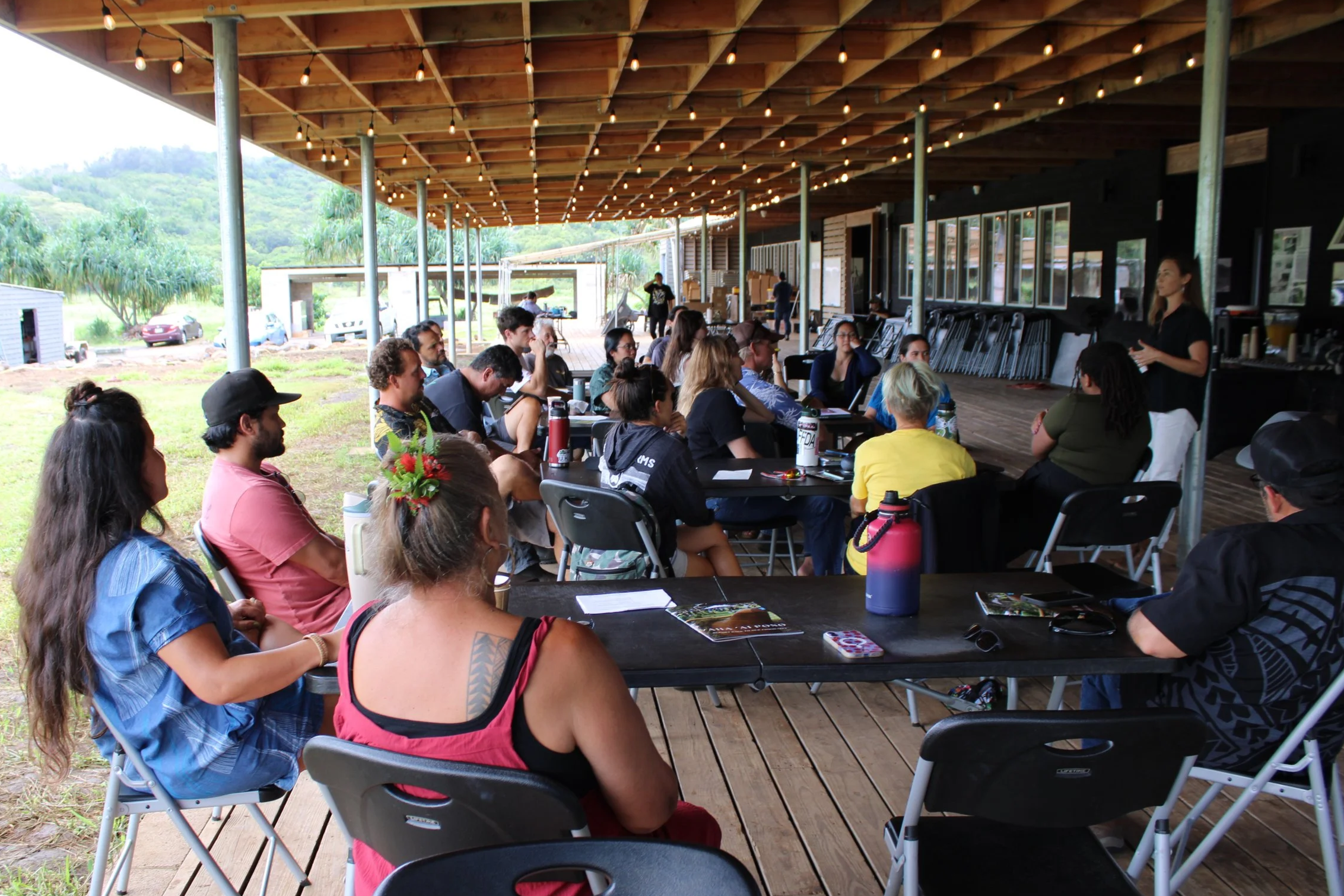
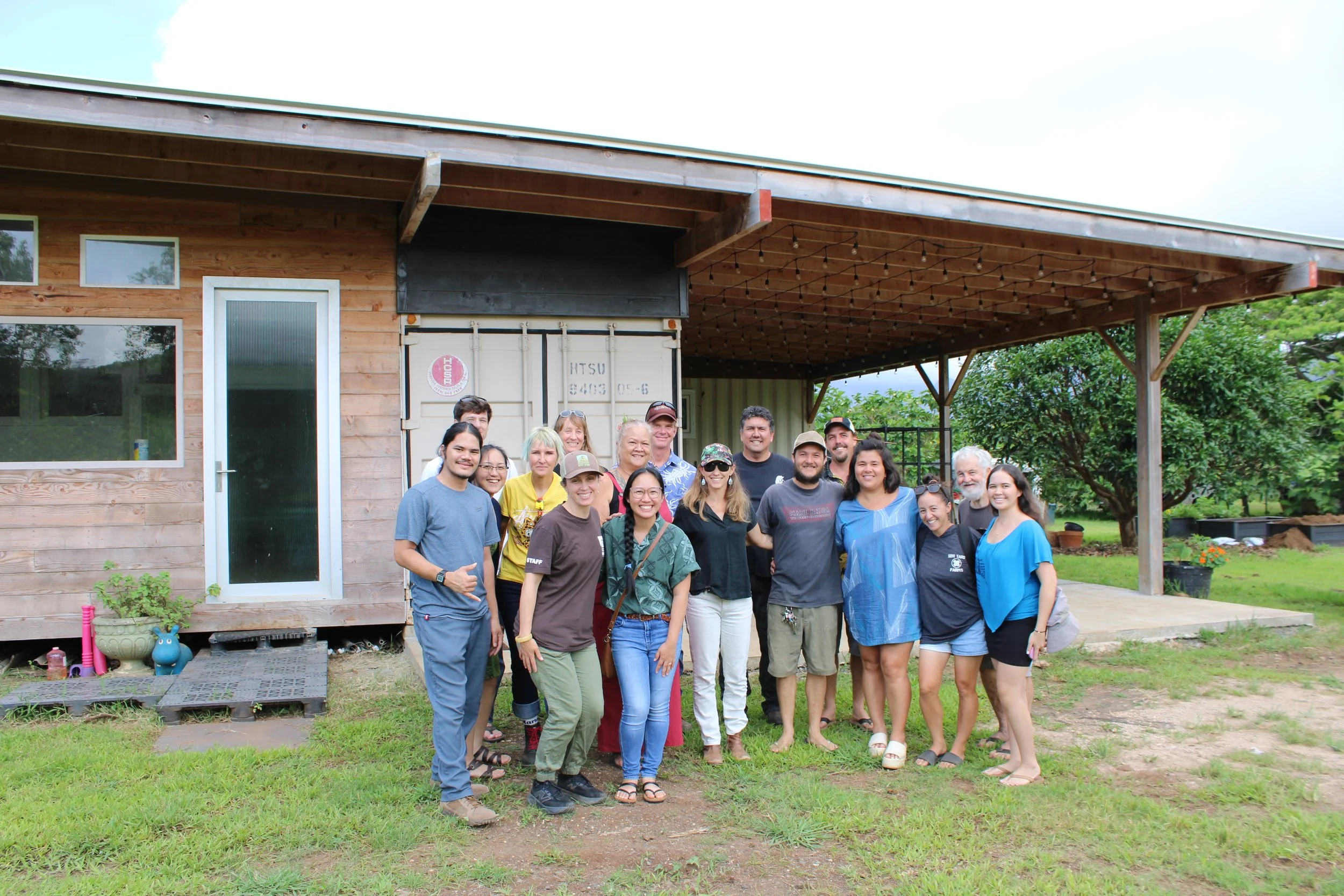
We spent the afternoon in important group conversations focusing on our work together and the future we could build. Participants shared how important these gatherings are to share, deepen relationships, and plan together. Everyone expressed excitement to join the next Pilina ʻAi gathering, where we will focus on values based procurement across Hawaiʻi.
“Having these types of events and connections to communicate and have those resources in your corner speaks volume. Most times we’re just so in our bubble, on ‘āina, mālama’ing and all the things sun up to sun down. I appreciate these times where I get to jump on a plane and come over, and be amongst others in this work. It truly fills my cup. And I just love to support and collaborate. I think collectively that’s the ultimate goal throughout the paeʻāina. That’s the way that we’re gonna be able to succeed and to keep this abundance in fruition and growing.”
–Sierra-Lynn Stone, Farm Owner and Operator, SBH Taro Farms
***
Pilina ʻAi gatherings are intended to deepen connections to the voices of Hawaiʻiʻs food system. As a pathway of HGFA’s Kuina ʻAi Program, these gatherings strengthen relationships and uplift moʻolelo through culturally grounded activities and conversations for the growth of the Hawaiʻi Good Food Movement.
Story by Christen Oliveira Reppun & Anna Harmon
Pilina ‘Ai is a pathway of Kuina ‘Ai